Two cold rooms can have the same dimensions and still need very different refrigeration systems.
One may store pre-chilled beverages with the door opened a few times each day. The other may receive several tonnes of warm seafood, operate in a hot and humid location, and have workers moving products through a large door throughout the day. Their room volumes are identical, but their cooling loads are not.
This is why a reliable cold room quotation cannot be based on length, width, and height alone. Before selecting a condensing unit, evaporator, insulation panel, or compressor, the engineer needs to understand how the room will actually be used.
This guide explains the information that matters and how to prepare it before requesting a quotation.
What Is a Cold Room Cooling Load?
The cooling load is the amount of heat that the refrigeration system must remove to maintain the required room and product temperatures.
That heat comes from several places:
- Heat passing through the walls, ceiling, floor, and door
- Warm and humid air entering when the door opens
- Heat removed from products entering the room
- Heat from people, lights, fans, motors, and handling equipment
- Heat added during defrost and other operating processes
- Heat that must be removed when products need to be chilled or frozen within a set time
The balance between these loads changes from project to project. A room designed mainly for long-term storage is different from a room that receives warm products every day. A blast freezer is different again because it must remove heat from products much faster.
1. Room Dimensions and Installation Conditions
Start with the room's internal dimensions:
- Length
- Width
- Clear internal height
- Number of rooms or temperature zones
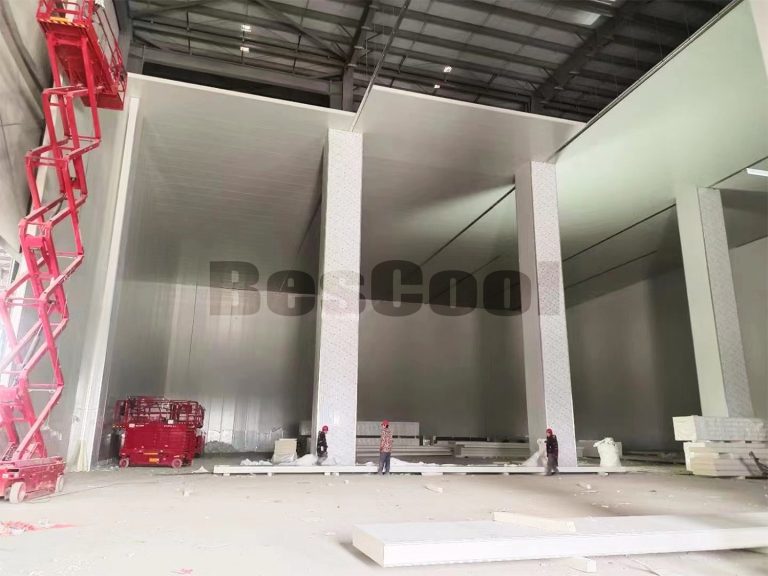
A drawing is better than a simple volume figure. It can show door positions, columns, internal partitions, floor levels, drainage, ceiling obstructions, and the available space for the evaporator.
The installation location also matters. Tell the supplier whether the cold room will be:
- Installed indoors or outdoors
- Built inside an existing warehouse
- Exposed to direct sunlight
- Located on a ground floor or upper floor
- Connected to a loading dock or processing area
Outdoor rooms and rooms exposed to high ambient temperatures may gain more heat through their envelope. The design also needs to account for local weather, particularly the expected maximum temperature and humidity.
2. Required Room Temperature
Specify the actual operating temperature, not only whether the room is a "chiller" or "freezer."
For example:
- Required room setpoint
- Acceptable temperature range
- Whether the temperature must remain stable during loading
- Whether different products need separate zones
The required temperature affects insulation, evaporating temperature, compressor selection, defrost method, and overall system capacity.
If you are still deciding on the setpoint, see our cold room temperature guide for food storage before requesting equipment selection.
3. Product Type and Daily Throughput
Product information is often the largest missing part of a quotation request.
The engineer needs to know:
- What product will be stored?
- How much product enters the room each day?
- What is the product temperature when it arrives?
- What temperature must it reach?
- How quickly must it reach that temperature?
- Is the product packed in cartons, crates, bags, trays, or pallets?
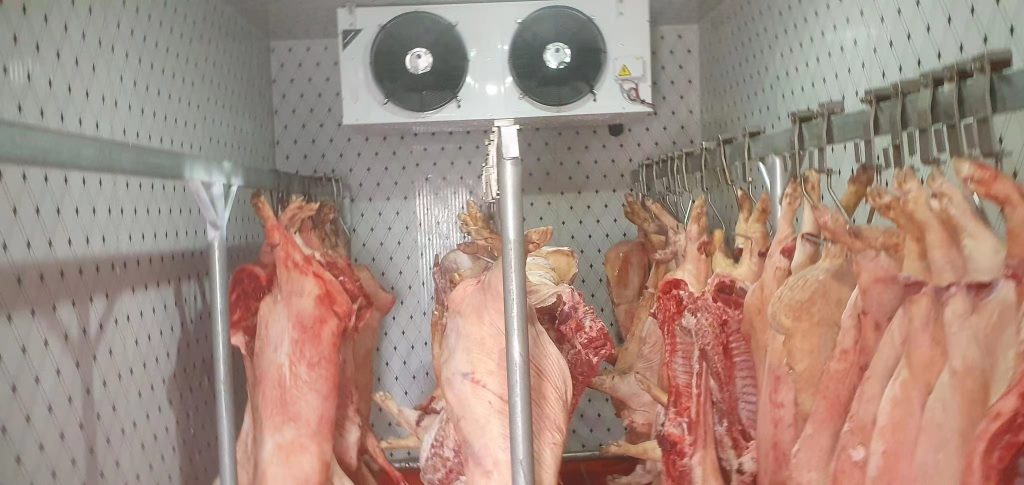
Daily throughput is more useful than total storage capacity alone. A 20-tonne room that receives one tonne of already chilled product each day has a different load from a 20-tonne room that receives ten tonnes of warm product in one shift.
The pull-down time is equally important. Cooling a product over 20 hours requires a different capacity from cooling the same product in 6 hours. If the product must be frozen rather than simply stored, the phase change adds a substantial load and requires a different design approach.
Do not describe a processing requirement as ordinary frozen storage. If the room must rapidly freeze seafood, meat, prepared food, or bakery products, request a blast freezer solution instead.
4. Door Size and Opening Frequency
Every door opening allows warm, moist air to enter the cold room. The refrigeration system must remove both the sensible heat from that air and the moisture that may later form frost on the evaporator.
Provide:
- Door width and height
- Number of doors
- Estimated openings per hour or per day
- Average time each door remains open
- Type of traffic, such as people, trolleys, pallet trucks, or forklifts
- Whether strip curtains, an air curtain, vestibule, or rapid door will be used
A busy distribution cold room can have a much higher infiltration load than a storage room that remains closed most of the day. Large doors, frequent forklift traffic, and humid ambient air all increase the effect.
This information also helps determine the door type and whether additional protection is worthwhile.
5. Insulation Panels, Floor, and Door Construction
Cooling load depends on how easily heat passes through the cold room envelope.
Useful information includes:
- Panel material, such as PU or PIR
- Panel thickness
- Wall, ceiling, and floor construction
- Door type and insulation thickness
- Whether the floor is insulated
- Whether the room is adjacent to an air-conditioned space, a hot production area, or outdoor air
For an existing room, provide the panel specification if it is known. For a new room, the supplier can recommend an appropriate construction after the operating temperature and installation conditions are confirmed.
Floor insulation deserves particular attention in freezer rooms. The design may also need a vapor barrier and anti-freeze measures beneath the floor, depending on the room temperature and local construction.
6. People, Lighting, and Equipment Inside the Room
Anything using power or producing heat inside the cold space contributes to the load.
List:
- Number of people normally working in the room
- Typical working hours
- Lighting power and operating time
- Forklifts, pallet trucks, conveyors, or other handling equipment
- Product-processing machines inside the room
- Any warm pipes or equipment passing through the enclosure
These details may be modest for a small storage room, but they can become important in a busy warehouse or food-processing facility.
7. Refrigeration System Location
The condensing unit needs suitable air circulation and an environment within its design limits.
Confirm:
- Indoor or outdoor installation
- Maximum ambient temperature
- Distance between the condensing unit and evaporator
- Approximate vertical height difference
- Available maintenance space
- Noise restrictions
- Corrosive, dusty, coastal, or high-altitude conditions
Long pipe runs, high ambient temperatures, and difficult installation conditions can affect system selection. Sharing this information early reduces the risk of changing the design after the equipment has already been quoted.
For more detail on matching equipment to the room, read how to choose a condensing unit for a cold room or review BesCool's cold room condensing unit options.
8. Power Supply and Refrigerant Requirements
Electrical information should be confirmed before equipment selection:
- Voltage
- Frequency
- Number of phases
- Any limits on starting current
- Local electrical standards
For example, a project with 380-415 V, 50 Hz, three-phase power cannot be treated as identical to one using 220 V, 60 Hz, three-phase power.
Also mention any required or prohibited refrigerants. Refrigerant selection may depend on local regulation, operating temperature, equipment availability, service capability, and the customer's own environmental or safety policy.
If there is no fixed preference, say so. The supplier can then propose a suitable configuration for review rather than making assumptions.
9. Storage Load, Pull-Down Load, and Freezing Load Are Not the Same
This distinction prevents many sizing mistakes.
Storage load means maintaining products that are already close to the required storage temperature.
Pull-down load means lowering incoming products from a higher temperature to the storage temperature within a specified time.
Freezing load means cooling products below their freezing point and removing the additional heat associated with freezing.
A system selected only for storage may not cool a large daily intake quickly enough. On the other hand, oversizing equipment without considering operating conditions can increase cost and lead to poor control.
The quotation should clearly state which duty the refrigeration system is expected to perform.
Cold Room Sizing Information Checklist
Use this checklist when requesting a quotation:
Room
- Internal length, width, and height
- Number of rooms and temperature zones
- Indoor or outdoor installation
- Site location and maximum ambient temperature
- Panel material and thickness
- Floor construction
- Door quantity and dimensions
Product
- Product name
- Total storage quantity
- Daily incoming quantity
- Incoming product temperature
- Required final temperature
- Required cooling or freezing time
- Packaging and pallet arrangement
Operation
- Door openings per day or hour
- Average door-open time
- People working inside
- Lighting and internal equipment
- Working schedule
- Loading method
Refrigeration and Electrical
- Condensing unit location
- Approximate pipe length and height difference
- Voltage, frequency, and phase
- Refrigerant requirement, if any
- Redundancy or backup requirement
- Noise or environmental restrictions
Photos, layout drawings, and a short video of the installation area are also useful.
Why a Detailed Request Produces a Better Quotation
A complete request allows the supplier to select the refrigeration capacity, compressor, evaporator, panel thickness, door, controls, and defrost arrangement around the real operating duty.
It also makes quotations easier to compare. Two suppliers may appear to offer similar systems, but one may have assumed pre-chilled products while the other has allowed for a large daily pull-down load. Without written design conditions, the price difference is difficult to judge.
The goal is not simply to choose the largest unit. It is to match the system to the room, product flow, climate, and operating schedule.
Request a Cold Room Selection
BesCool supplies custom cold room systems for food storage, processing, logistics, retail, and other cold chain applications.
To request a configuration and quotation, send the information in the checklist through our contact form. If some details are not yet available, provide the confirmed information first and mark the remaining items for discussion.
Final equipment selection should be based on a project-specific refrigeration load calculation completed by a qualified engineer.