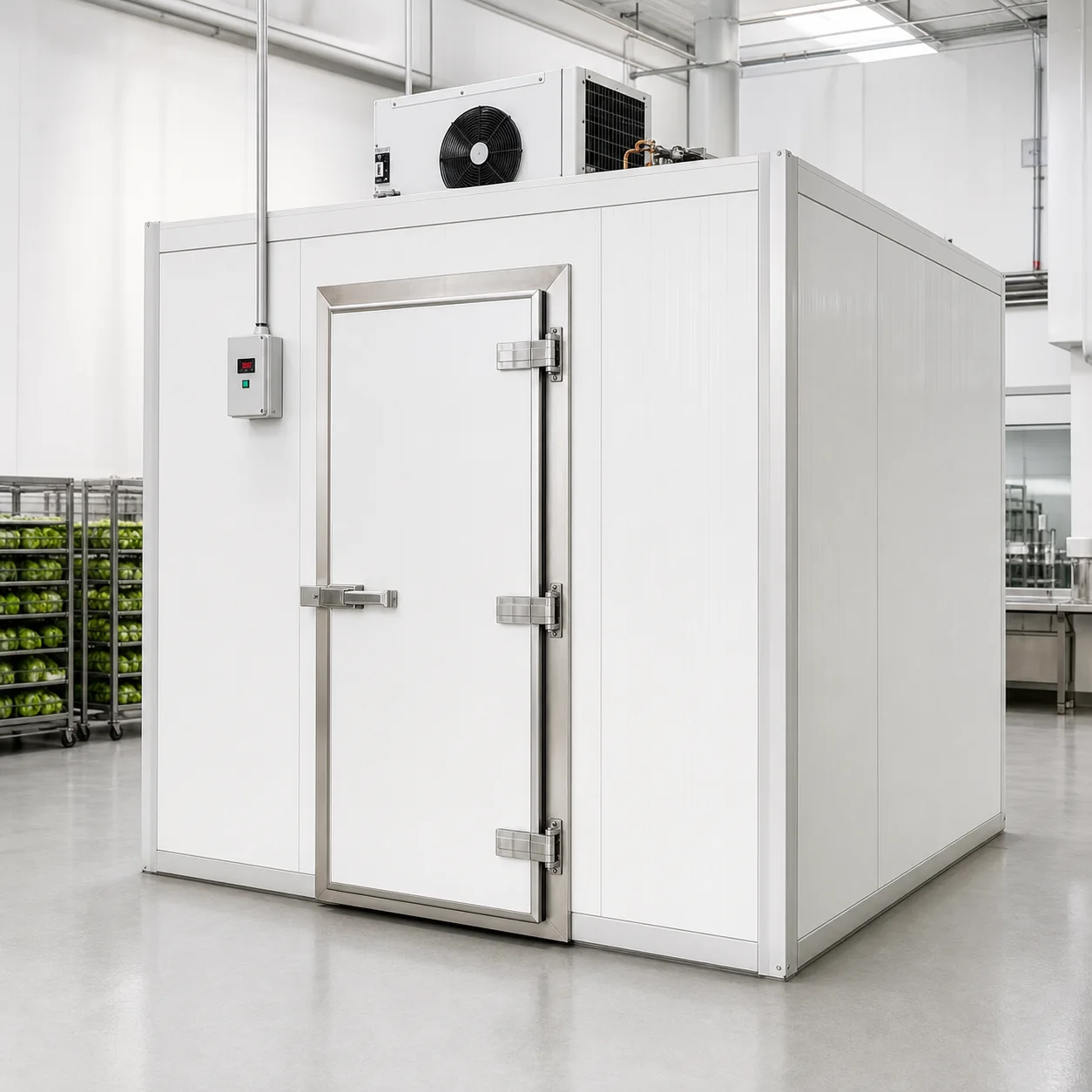
Cold Room Applications
Cold storage designed around the product and operating process
A commercial cold room should be planned around what will be stored, how often the door will open, how much warm product enters each day, and how the site operates. BesCool reviews these project conditions before matching the room enclosure and refrigeration equipment. Common applications include food storage, supermarkets, restaurants, hotels, seafood and meat handling, fruit and vegetable storage, pharmaceutical cold chain facilities, and logistics warehouses.
Foodservice and retail
Restaurants, hotels, supermarkets, and central kitchens use cold rooms to organize chilled or frozen ingredients close to daily operations. Door traffic, shelf layout, cleaning access, and available floor space should be considered together.
Seafood, meat, fruit and vegetables
Different products create different heat loads and humidity requirements. Product packaging, incoming temperature, daily loading volume, and required storage condition all affect room and equipment selection.
Pharmaceutical and logistics cold chain
Cold chain warehouses require a practical layout for receiving, storage, picking, and dispatch. Temperature monitoring, door management, backup planning, and local compliance requirements should be confirmed by the buyer and project engineer.
Room Type
Chiller room vs freezer room
A chiller room is generally used when products must be kept cool without being frozen. A freezer room is intended for products that need frozen storage. The correct choice depends on the stored product, its required condition, incoming product temperature, storage duration, loading pattern, and the temperature required by the buyer’s process.
Chiller room considerations
Typical uses include fresh produce, beverages, dairy ingredients, prepared food, and other products that require chilled storage. Selection should account for product sensitivity, moisture control, air distribution, door openings, and daily turnover.
A chiller application is not defined by room size alone. The refrigeration load must also reflect how the room will be used throughout the working day.
Freezer room considerations
Freezer rooms are used for frozen meat, seafood, prepared food, ice cream, and other products requiring frozen storage. Panel construction, door details, floor insulation, defrost strategy, and equipment matching require particular attention.
A storage freezer is different from a blast freezer, which is designed to remove heat from incoming products more rapidly.
Cold Room Components
A matched enclosure and refrigeration system
A reliable project depends on the room structure and refrigeration equipment working as one system. Component selection should follow the calculated load and the buyer’s operating requirements.
Insulated panels
Wall, ceiling, and where required floor insulation create the thermal enclosure. Panel type and thickness should be selected according to room condition, site environment, and structural needs.
Cold room doors
Hinged or sliding doors can be considered according to traffic, opening size, available clearance, trolley use, and cleaning requirements.
Condensing unit
The condensing unit is selected from the calculated cooling load, design temperatures, refrigerant requirement, power supply, and installation environment.
Unit cooler or evaporator
The indoor heat exchanger removes heat from the room. Air throw, fin spacing, defrost method, drainage, and product sensitivity are relevant selection factors.
Control system
Controls coordinate temperature operation, fans, defrost, alarms, and protective functions. Required monitoring and remote access should be specified before quotation.
Lighting and accessories
Lighting, valves, piping accessories, drainage items, shelving interfaces, safety hardware, and installation materials are confirmed according to project scope.
How to Plan the System
Selection starts with the real operating load
Room dimensions are only one part of the calculation. The engineer also needs to understand stored products, incoming temperature, daily movement, door-opening frequency, ambient conditions, and the required pull-down or storage process.
For projects that receive unfrozen product or require rapid processing, the load profile may be very different from a room that only stores pre-cooled goods. Sharing complete operating information helps avoid an undersized or unnecessarily oversized system.
The planned location of shelving, lighting, drains, doors, and the evaporator should also be shown on the layout so airflow and service access can be reviewed before production.
Information Required for Quotation
Prepare these project details
- Room length, width, and height
- Required storage temperature
- Products to be stored and their incoming condition
- Daily loading capacity and operating schedule
- Installation city, country, and indoor or outdoor location
- Local ambient temperature around the equipment
- Available voltage and frequency
Send these details through the quotation form so the project scope can be reviewed.
Related Products
Complete the refrigeration system
FAQ
Cold room buyer questions
How do I choose the right cold room size?
Start with the maximum stock volume, packaging dimensions, aisle and shelving requirements, product movement, and future operating needs. External room dimensions alone do not determine refrigeration capacity.
What information is required for a quotation?
Provide room dimensions, required temperature, stored products, incoming product condition, daily loading capacity, installation location, ambient temperature, voltage, and frequency.
Can the cold room be customized?
Room layout, door position, panel configuration, refrigeration equipment, controls, and accessories can be reviewed against the project requirements. Final scope depends on confirmed site and operating information.
What is the difference between a chiller room and a freezer room?
A chiller room keeps suitable products cool without freezing them, while a freezer room is used for frozen storage. Product requirements and operating process determine the correct design condition.
Can BesCool supply a complete refrigeration system?
BesCool can review a matched scope including panels, doors, condensing unit, unit cooler, controls, lighting, and related accessories. Installation responsibilities and optional items should be confirmed in the quotation.
Do I need to provide local climate information?
Yes. Ambient temperature and whether equipment will be installed indoors or outdoors affect condenser selection, ventilation planning, and protective requirements.