Available Configurations
Condensing unit configurations for different project conditions
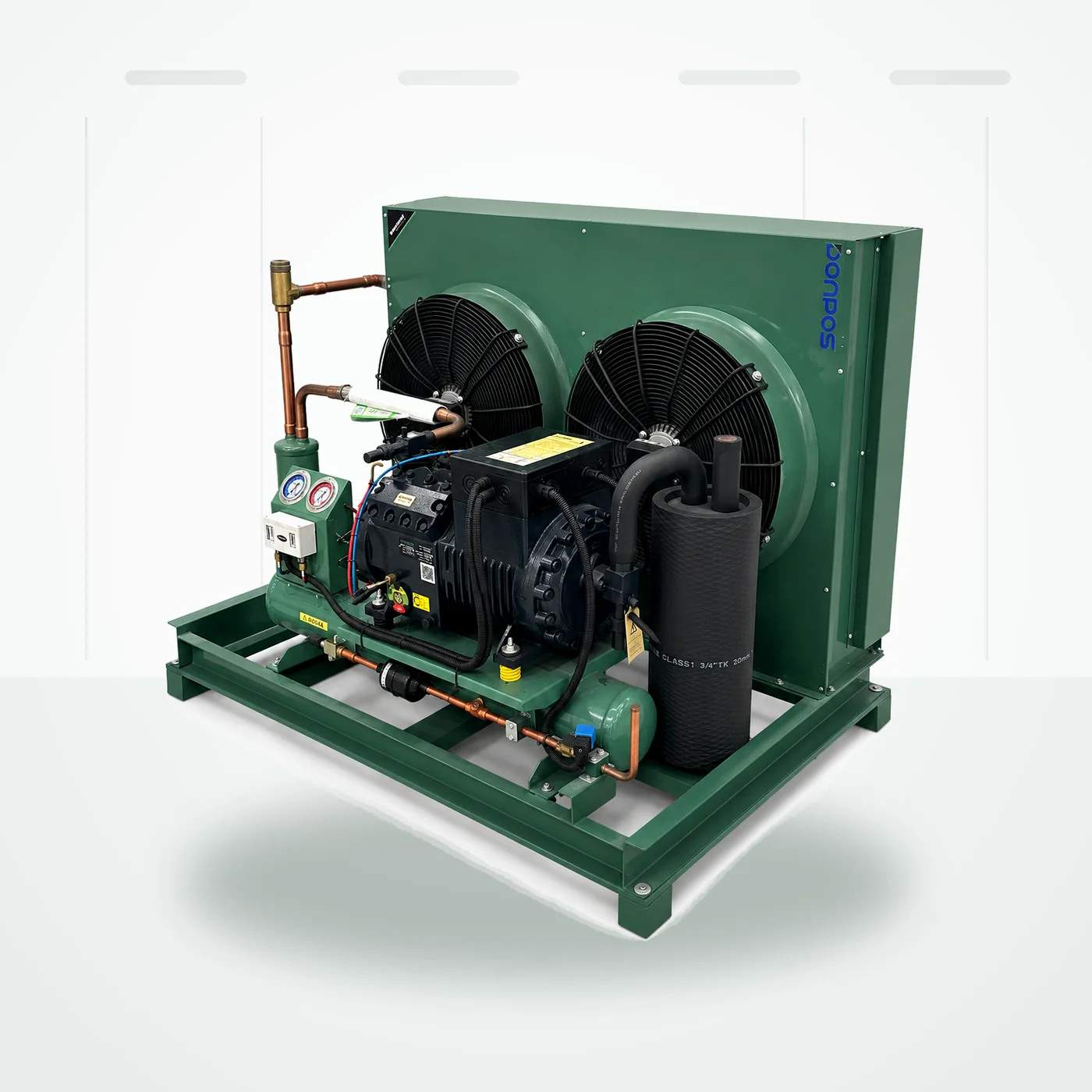
A condensing unit combines the main compression and heat-rejection components of a refrigeration system. The appropriate configuration depends on the cooling load, design temperatures, available utilities, installation environment, and the buyer’s component requirements. BesCool reviews project data before proposing a unit arrangement.
Air-cooled condensing unit
An air-cooled condenser rejects heat to outdoor or surrounding air. Selection should consider local ambient temperature, ventilation clearance, noise requirements, and whether the equipment is installed indoors or outdoors.
Water-cooled condensing unit
A water-cooled arrangement transfers heat to a water circuit. Water availability, water quality, pumping, heat-rejection equipment, maintenance access, and local site requirements must be confirmed.
Scroll compressor unit
Scroll-based configurations may suit selected commercial refrigeration duties. Final compressor selection depends on capacity, temperature condition, refrigerant, power supply, and the operating envelope required by the project.
Semi-hermetic compressor unit
Semi-hermetic configurations can be considered for applications requiring serviceable compressor construction and project-specific capacity control. Component make and model must be confirmed during quotation.
Applications
Commercial refrigeration applications
Condensing units are used across cold storage, food retail, food processing, and other commercial refrigeration systems. Application information is essential because two projects with similar room dimensions can have very different loads and operating requirements.
Cold rooms and freezer rooms
A cold room system requires a unit matched to storage temperature, product load, room insulation, door use, ambient condition, and evaporator selection.
Supermarket refrigeration
Retail applications may include display equipment, preparation areas, and storage rooms. Operating schedule, connected evaporators, controls, and local noise limits should be stated.
Food processing and warehouses
Processing rooms, frozen storage, and logistics warehouses require load information based on production flow, product movement, and environmental conditions.
How to Select a Condensing Unit
Match the unit to the calculated operating condition
Selection begins with cooling load rather than compressor horsepower alone. The engineer must know the room or process temperature, evaporating and condensing conditions, local ambient temperature, refrigerant requirement, voltage, and the environment around the equipment.
Compressor type is one part of the system. Condenser size, receiver, controls, safety devices, piping arrangement, and the connected evaporator must also suit the duty. For a blast freezer, the load profile and required pull-down process differ from steady frozen storage.
Installation planning should include service clearance, airflow or water connection, weather exposure, drainage, electrical access, and local regulations. Final component brands and refrigerant are confirmed only after the buyer’s project requirements are reviewed.
Selection Inputs
Seven factors to confirm
Cooling load
Include transmission, product, air infiltration, people, lighting, motors, and operating schedule where applicable.
Room and ambient temperatures
Both indoor design condition and local heat-rejection condition affect capacity.
Refrigerant and compressor type
These must suit the application, target market, service availability, and buyer requirements.
Voltage and installation environment
Confirm phase, frequency, indoor or outdoor location, ventilation, water availability, and climate.
Installation Planning
Allow for heat rejection, service and protection
A correctly selected unit still needs a suitable installation location. Air-cooled equipment requires clear intake and discharge paths so hot air does not recirculate. Water-cooled equipment requires confirmed water flow, water quality, piping, drainage, and access to the related water system.
The site should provide safe electrical isolation, stable mounting, service clearance, and protection appropriate to weather, dust, corrosion, noise, and local conditions. Piping length and height difference between the unit and evaporator should be shared before the final configuration is confirmed.
The buyer should also identify operating-hour expectations, local service capability, and any requirement for capacity control or standby equipment. These decisions affect configuration but cannot be finalized without the confirmed load and operating sequence.
Information Required for Quotation
Provide the design condition, not only a model request
- Application and connected equipment
- Required refrigeration capacity or complete load information
- Evaporating temperature
- Condensing temperature or local ambient design condition
- Required refrigerant, if already specified
- Available voltage, phase, and frequency
- Installation city, country, and indoor or outdoor location
When capacity has not been calculated
If the buyer does not yet have a confirmed capacity, provide room dimensions, insulation details, target temperature, stored product, incoming product temperature, daily loading, door use, and ambient conditions. This information helps the engineering team review the load basis.
Use the quotation form to send the available information. Any missing data can then be identified before component selection.
Related Products
Build a matched refrigeration system
FAQ
Condensing unit buyer questions
How do I select the correct condensing unit?
Use the calculated cooling load and design operating conditions. Room temperature, ambient temperature, refrigerant, evaporator, voltage, compressor type, and installation environment must be considered together.
What is the difference between air-cooled and water-cooled units?
Air-cooled units reject heat to air and require suitable ventilation. Water-cooled units reject heat to a water circuit and require water-system planning, water-quality consideration, and related heat-rejection equipment.
Can I choose the compressor brand?
Component preferences can be discussed during quotation. Availability and technical suitability must be confirmed against the project condition and target market.
Which refrigerant should I specify?
Refrigerant selection depends on the application, equipment design, local regulations, service availability, and buyer requirements. It should be confirmed before final equipment selection.
Can a unit be selected from room size only?
No. Room size does not capture product load, incoming temperature, door openings, insulation, ambient temperature, internal heat sources, or operating schedule.
What should I send with my quotation request?
Send the application, required capacity or load data, evaporating and condensing conditions, refrigerant requirement, voltage and frequency, site location, and installation environment.