Choosing the right cold room temperature is one of the most important steps in a food storage project. A cold room is not only an insulated box. It is a complete refrigeration system designed to keep products within a stable temperature range.
If the room temperature is too high, food freshness and shelf life may be affected. If the room temperature is too low, some products may freeze, lose moisture, or suffer quality problems. The best temperature depends on the product, storage time, loading quantity, packaging, door opening frequency, and local ambient conditions.
This guide explains common cold room temperature ranges and what information buyers should prepare before requesting a quotation.
Why Cold Room Temperature Matters
Temperature affects both product quality and refrigeration system performance. A well-designed cold room should keep the product stable while avoiding unnecessary energy consumption.
The target temperature influences:
- Insulated panel thickness
- Cold room door selection
- Evaporator or unit cooler capacity
- Condensing unit selection
- Defrost method
- Compressor workload
- Electricity consumption
- Product shelf life
For example, a fresh vegetable cold room, a meat processing room, and a frozen seafood storage room all need different designs. Even if the room size is the same, the refrigeration equipment may be completely different.
General Food Storage Temperature Reference
For general food safety guidance, the U.S. FDA recommends keeping refrigerators at or below 40 F, which is about 4 C, and freezers at 0 F, which is about -18 C. FoodSafety.gov also uses 40 F / 4 C or below for refrigerator storage and 0 F / -18 C or below for freezer storage in its cold food storage chart.
These values are useful as a food safety reference, but commercial cold room design should still be based on the actual product and project conditions.
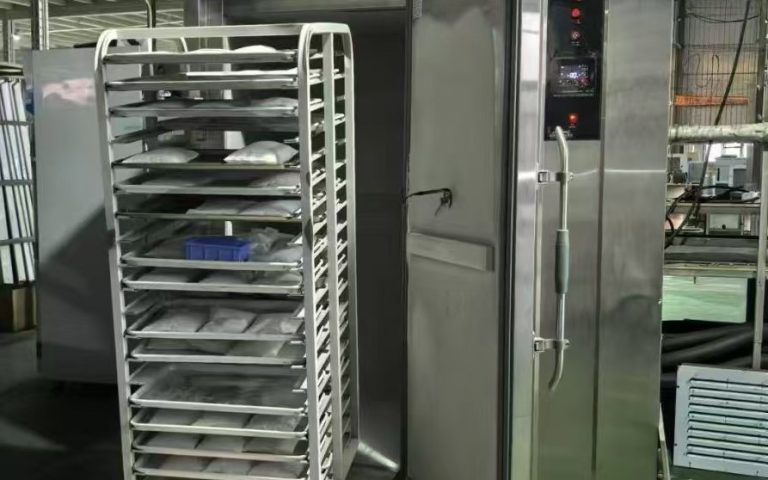
For example, frozen meat storage may use a different temperature from chilled dairy storage. A blast freezer is different again, because it is designed for rapid freezing rather than only storage.
Common Cold Room Temperature Ranges
The following ranges are common in commercial refrigeration projects. Exact settings should be confirmed according to product requirements, local regulations, and storage purpose.
Fresh Fruit and Vegetables
Many fruit and vegetable cold rooms are designed around 0 C to 10 C, depending on the product.
Some products need low temperature and high humidity to reduce moisture loss. Others are sensitive to chilling injury and should not be stored too cold. For example, leafy vegetables, apples, berries, potatoes, onions, and tropical fruits may all require different storage conditions.
For fruit and vegetable projects, buyers should confirm:
- Product type
- Target temperature
- Required humidity
- Storage time
- Whether products enter the room warm
- Daily loading quantity
If products are harvested warm and need fast cooling, the refrigeration load may be higher than a simple storage room.
Fresh Meat and Poultry
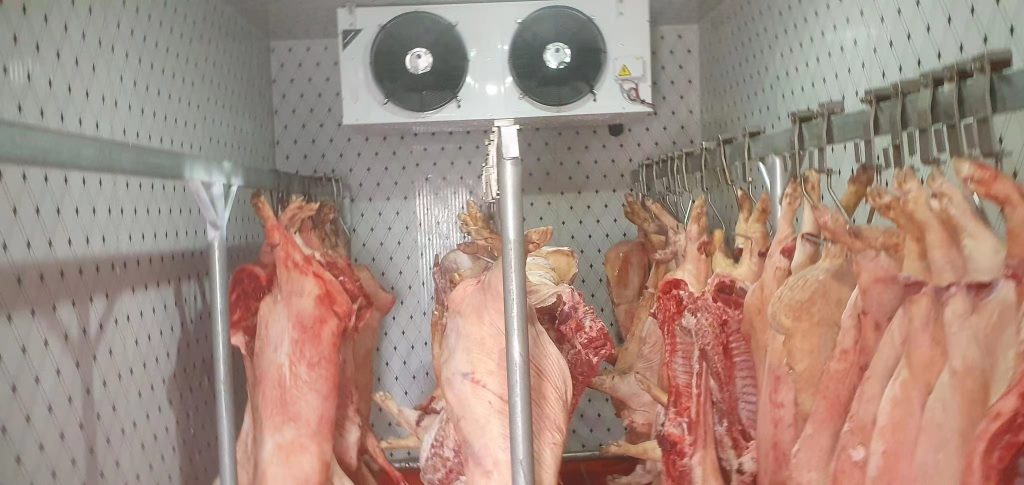
Fresh meat and poultry usually require low-temperature chilled storage. The goal is to slow quality loss and keep products stable before processing, distribution, or retail.
Meat storage rooms should also be easy to clean. Panel surface, drainage, floor design, door sealing, and airflow should be considered during project design.
Important quotation information includes:
- Meat type
- Room size
- Target temperature
- Product inlet temperature
- Daily loading quantity
- Storage time
- Processing or storage purpose
Seafood and Fish
Seafood freshness changes quickly, so temperature stability is very important. Chilled seafood storage, frozen fish storage, and seafood processing rooms may require different refrigeration solutions.
For chilled seafood, corrosion resistance and clean drainage are often important. For frozen seafood, insulation, door sealing, and stable low-temperature performance become more important.
If the project needs to freeze seafood quickly, a blast freezer may be more suitable than a normal freezer room.
Dairy Products
Dairy products usually require chilled storage with stable temperature and clean airflow. Milk, yogurt, cream, butter, and cheese may have different requirements depending on packaging and storage time.
For dairy projects, the main focus is often stable temperature, hygiene, and gentle airflow. Large temperature swings should be avoided, especially during loading and unloading.
Frozen Food Storage
Frozen food storage is commonly designed around -18 C or lower, depending on the product and storage period.
Frozen rooms need stronger insulation than chilled rooms. Door sealing, floor insulation, defrost method, evaporator selection, and condensing unit performance all become more important.
Frozen storage projects should confirm:
- Product type
- Target room temperature
- Storage quantity
- Product inlet temperature
- Daily loading quantity
- Door opening frequency
- Ambient temperature
- Installation location
Chilled Room vs Freezer Room
A chilled room keeps products above freezing temperature. A freezer room keeps products below freezing temperature for frozen storage.
This difference affects the whole system:
- Panel thickness
- Door type
- Evaporator selection
- Condensing unit capacity
- Defrost method
- Floor insulation
- Refrigerant piping
- Control system
A 2 C vegetable room and a -18 C frozen meat room should not use the same design. A -35 C blast freezer is another category, because it needs to remove heat from products quickly within a target freezing time.
Common Mistakes When Choosing Cold Room Temperature
Only Providing Room Size
Room size is important, but it is not enough. The supplier also needs to know what product will be stored and how much product enters the room every day.
Two rooms with the same dimensions may need different refrigeration capacity if one stores already chilled products and the other receives warm products daily.
Ignoring Product Inlet Temperature
Product inlet temperature has a big impact on refrigeration load. If products enter the room warm, the system must remove more heat.
For example, a cold room used only for storage is different from a room used to cool newly processed products.
Setting the Temperature Too Low
Some buyers choose a lower temperature because they think it is safer. But too low a temperature may damage certain products, increase energy cost, and require more expensive equipment.
The target temperature should match the product requirement, not simply be as low as possible.
Not Considering Door Opening Frequency
Frequent door openings bring warm air into the room. This increases refrigeration load and may cause temperature fluctuation or frost buildup.
For busy warehouses, door size, air curtains, strip curtains, and workflow should be considered.
What Information Should You Send for a Cold Room Quotation?
To get a more accurate quotation, prepare the following information:
- Product type
- Target room temperature
- Room size: length, width, height
- Storage quantity
- Daily loading quantity
- Product inlet temperature
- Required cooling time if needed
- Ambient temperature
- Indoor or outdoor installation
- Door size and quantity
- Power supply
- Destination country
- Any hygiene or food safety requirements
With this information, the supplier can recommend suitable insulated panels, cold room doors, evaporators, condensing units, controls, and accessories.
Cold Room Equipment Used in a Complete System
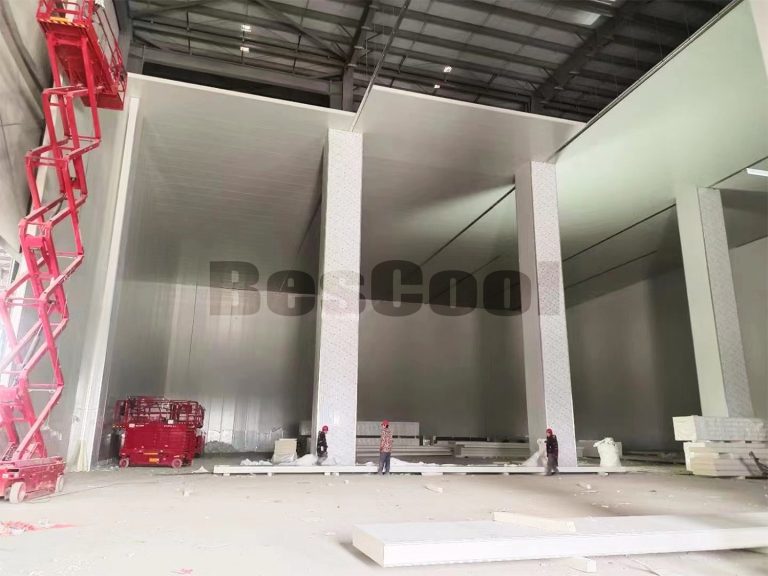
A complete cold room project usually includes:
- PU or PIR insulated panels
- Cold room door
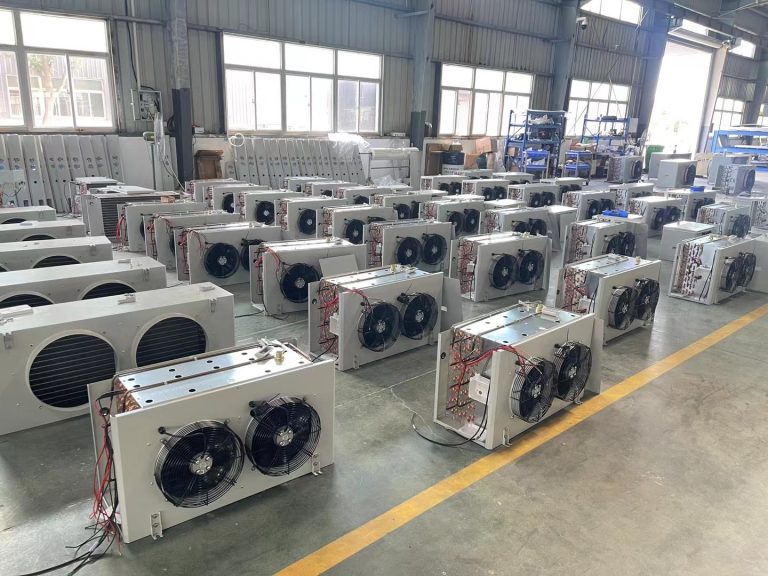
- Evaporator or unit cooler
- Condensing unit
- Refrigeration control system
- Copper pipe and accessories
- Drainage and electrical components
- Optional floor insulation
The condensing unit and evaporator must be matched to the room temperature and product load. If the project is for frozen storage, the system also needs a suitable defrost design.
Need a Custom Cold Room?
BesCool manufactures modular cold rooms, freezer rooms, condensing units, evaporators, unit coolers, and complete refrigeration systems for global food storage and cold chain projects.
If you need a cold room for fruit, vegetables, meat, seafood, dairy, frozen food, supermarket storage, restaurant storage, or food processing, send us your room size, product type, temperature requirement, and destination country.
Our engineering team can help recommend a suitable cold room configuration for your project.
Contact BesCool for a custom cold room quotation: