A cold room rarely fails without warning. Temperature drifts up a degree or two, the compressor runs longer, frost appears where it should not — and only then does the room stop holding temperature. Reading those signals is the difference between a planned service call and a lost stock of product.
This guide is for the people who run cold rooms — food processors, cold store operators, supermarket and restaurant managers, and the contractors who service them. It works through the common symptoms in the order you would meet them, explains what each usually means, and sets out a maintenance routine that keeps small faults from becoming expensive ones.
Read this first: refrigeration and electrical work must be carried out by qualified technicians and must follow local codes and the supplier’s documentation. The values in this guide are general industry guidance for planning and diagnosis — confirm the exact figures for your system against its drawings and nameplate data.
Start with the symptom: what the room is telling you
Troubleshooting is faster when you work backwards from the symptom instead of guessing at parts. The table below maps the six symptoms operators report most often to the areas worth checking first.
| Symptom | What it usually indicates | First place to look |
|---|---|---|
| Room too warm; unit runs continuously | Heat load above capacity, restricted airflow, low refrigerant charge, air infiltration | Evaporator air path, door seals, condenser coil |
| Temperature fluctuates up and down | Defrost behaviour, sensor placement, unit cycling on limits, frequent door openings | Defrost settings, sensor position, door discipline |
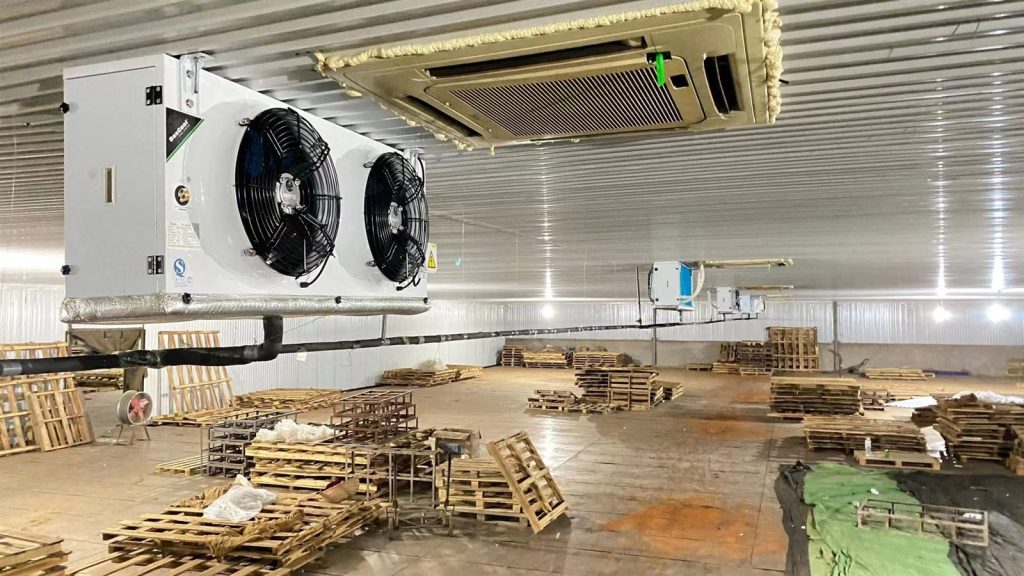
| Ice or heavy frost on the evaporator | Defrost failure, blocked return air, infiltration, undercharge | Defrost cycle and termination, coil airflow |
| Unit short-cycles (starts and stops often) | High discharge pressure from a dirty condenser, control or overload issue, charge problem | Condenser coil, controls, running pressures |
| Water on the floor, or ice at the door | Blocked or frozen drain line, damaged threshold or gasket | Drain line, door assembly |
| Room holds temperature but costs more to run | Degraded insulation or seals, condenser fouling, worn fans | Envelope inspection, condenser cleaning |
Before a fault appears, review the table once a quarter — most entries take minutes to verify.
Too warm, too slow, or fluctuating: diagnosing temperature problems
The 30-second checks anyone can do
Before calling a technician, confirm the basics. These five checks resolve a surprising share of “the cold room is warm” reports:
- Setpoint versus actual. Compare the controller with a separate thermometer placed mid-room. A correct controller reading with a warm room points to a sensor or airflow problem, not refrigeration.
- Door condition. Check the door closes fully, the gasket is intact, and nothing holds it open — a pallet, a broken hinge, a latch that no longer pulls tight.
- Air path. Is product stacked against the return air side, or the coil blocked with frost, ice or dust?
- Condenser condition. A coil matted with dust, leaves or packaging film cannot reject heat.
- Anything changed? A higher heat load, a door left open during deliveries, or a room loaded beyond design capacity all show up as “the room stopped coping”.
Refrigeration-side causes
If the checks above are clean, the fault is likely in the refrigeration circuit — and this is where the work must be handed to a certified technician:
- Low charge or a leak. The room cools slowly, runs continuously, and shows low pressure with a starved or partly frosted evaporator. Leaks have a cause (vibration, corrosion, a failed joint); finding it matters as much as recharging.
- TXV / EEV faults. The expansion valve controls how much refrigerant enters the evaporator; when it sticks, hunts or is set incorrectly, capacity drops even though the compressor runs.
- Restricted capillary or strainer. Shows as low suction pressure and poor cooling. Never “fix” a restriction by adding refrigerant.
- Condenser fan failure. One failed fan raises discharge pressure, cuts capacity and can trip the unit on high pressure — especially in hot weather.
Legal and safety note: refrigerant handling is regulated in most countries and requires certified personnel and recovery equipment. Do not attempt to top up or repair a circuit yourself.
Electrical and control causes
- Contactors and relays. Pitted contacts cause intermittent running, voltage drop and eventually failure to start; inspect and torque connections at every service.
- Overloads and protection devices. Repeated tripping is a symptom — usually high pressure, high current or a failing motor.
- Controller setpoints. An accidental setpoint change, or a defrost schedule never adjusted after a product change, looks exactly like an equipment fault.
- Defrost clock / timer. A stuck or misconfigured timer prevents the room returning to temperature after defrost.
When the problem is the room, not the machine
Sometimes the refrigeration system is working correctly and the room is still losing temperature. Look at the envelope:
- Damaged insulation or a broken vapour barrier. Moisture enters the panel and performance falls gradually, so the change is easy to miss.
- Panel joints and penetrations. Gaps at ceiling-to-wall joints, pipe and cable entries, and damaged seals let warm, humid air in continuously.
- Floor issues. A damaged floor panel or a threshold that no longer seals creates a permanent infiltration path — and in freezers, spreading ice.
- Door traffic. Strip curtains, air curtains and fast door closure matter more than most operators expect in busy rooms.
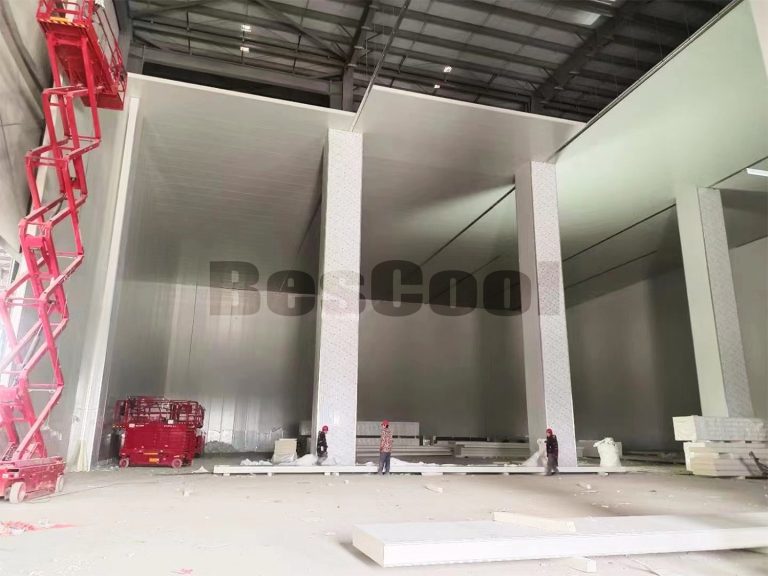
If the envelope itself is the limitation — undersized for a new product line, or damaged beyond economical repair — our modular cold rooms and freezer rooms are built to be re-specified around the load you actually have today.
Ice building up on the evaporator: defrost and airflow
Ice on the evaporator is the most common fault operators try to solve by hand. Manual defrosting treats the symptom; the ice always returns unless the cause is found. Work through these in order:
- Defrost frequency and duration. If the cycle is too short or infrequent for the room’s humidity and door traffic, ice accumulates faster than it clears.
- Defrost termination. A failed termination sensor or heater ends the cycle before the coil is clear — or prevents it starting.
- Drain line. A blocked or frozen drain keeps melt water in the coil area, where it refreezes.
- Airflow restriction. Product stacked too close to the coil, or a failed fan, leaves part of the coil below freezing longer than defrost allows.
- Infiltration and charge. Worn gaskets and missing strip curtains load the coil with moisture; an undercharged system runs colder at the evaporator and builds frost faster.
If ice returns within days of a manual defrost, have the defrost cycle and charge checked — repeated manual defrosting masks the fault and damages the coil.
Door seals and thermal bridges: the small gaps that cost the most
Doors and joints are where most heat enters a working cold room, and they are the cheapest faults to prevent.
- Gasket check. Close the door on a strip of paper and pull: if it slides out with no resistance, the gasket is not sealing there. Check all four sides.
- Hinges, latches and closers. A door that sags or needs a push leaves a gap along its full height — adjust the hardware before replacing the gasket.
- Strip and air curtains. High-traffic doors benefit from both; replace damaged strips rather than leaving them to hang.
- Joints and penetrations. Seal gaps around pipes, cables and brackets; a joint that looks closed can still leak air.
- Thresholds and floors. Damaged thresholds let water and warm air in — and in freezers, ice spreads under the floor.
Inspect gaskets and joints monthly in busy rooms, and after any impact from a forklift or pallet truck.
Condensing unit heat rejection: why it works in winter and fails in summer
A condensing unit that performs in cool weather and struggles in summer is usually telling you about heat rejection, not capacity.
- Coil condition. Dust, grease and debris insulate the coil; clean it far more often on dusty or greasy sites.
- Clearance. The unit needs unobstructed air in and out — enclosures or stacked pallets that recirculate hot air raise discharge pressure and cut capacity.
- Design ambient. If the unit is undersized for the site’s real summer temperature, cleaning will not close the gap.
- Sun and ventilation. Direct sun and blocked airflow make a marginal installation fail on the hottest days.
- Fans. Confirm all fans run and are clear of debris; a failed fan is a common cause of summer high-pressure trips.
Controllers and sensors: when the setpoint is right but the room is wrong
Control faults mimic refrigeration faults closely, so it is worth checking them before dismantling anything:
- Sensor placement. A sensor near the door, in the evaporator air stream or touching a panel reads the wrong temperature — it should measure the room, not the equipment.
- Calibration drift. Compare controller and calibrated thermometer quarterly; a drifting sensor quietly hides a warm room.
- Defrost parameters. Confirm the schedule matches the current product and season.
- Alarms and logging. Enable high-temperature alarms and review a simple weekly log.
- After power interruptions. Confirm the controller returned to the correct parameters, not a default profile.
Preventive maintenance calendar
A documented routine costs a fraction of an emergency call-out. Adapt the intervals below to your duty cycle, dust levels and door traffic; your supplier’s maintenance schedule takes precedence.
| Interval | Task | Who |
|---|---|---|
| Weekly | Log room temperature; visual check of door, gasket and evaporator; listen for unusual noise; check for unexpected ice or water | Operator |
| Monthly | Clean gaskets and condenser coil surface; check drain pan and line; observe one full defrost cycle; test the high-temperature alarm | Operator / maintenance |
| Quarterly | Deep-clean condenser; check running pressures and superheat; inspect electrical connections; verify sensor accuracy; review controller and defrost settings | Certified technician |
| Yearly | Envelope audit (panels, joints, penetrations, floor, thresholds); inspect fan motors and defrost heaters; verify drain fall and insulation; review spare parts and service records | Technician + operator |
| As needed | Replace damaged gaskets and strip curtains; reseal penetrations; re-torque electrical terminations after any thermal event | Operator / technician |
Repair or replace? Deciding when an old condensing unit should be retired
Age alone is a poor reason to replace equipment. Better signals are performance and economics:
- Repeat failures. Two or more significant repairs in a short period usually mean the unit is near the end of its service life.
- Rising energy use. If the room holds temperature but running hours and consumption climb, efficiency is degrading.
- Parts and refrigerant availability. Older units get expensive to keep running when parts or the original refrigerant are hard to source.
- Capacity mismatch. A business change — new product, larger volumes, faster throughput — often means the room needs a different design point, not another repair.
- Envelope condition. If the room itself is degraded, replacing the unit alone will not restore performance.
Where replacement is the right answer, our air-cooled and water-cooled condensing units are matched to your room’s load, design ambient and voltage, and supplied with the drawings your installer needs.
What to send us when you need remote help
In markets where local service is limited, a clear fault report shortens diagnosis considerably. Send us:
- The symptom and its history — what changed, when it started, and whether it is constant or intermittent.
- Photos — the evaporator (including any ice pattern), the condensing unit, the controller display and the door seal area.
- Temperature records — even a handwritten log over a few days.
- System details — room size, product, design temperature, and the condensing unit’s model plate.
- Running pressures, if a technician is on site to take them.
From that, our engineering team can narrow down the likely cause, advise on parts, and — where replacement is the better route — quote a correctly matched unit.
FAQ
Why is my cold room not cold enough?
Most cases come down to one of five things: restricted airflow (a blocked or iced evaporator), a heat load above the room’s design, air infiltration through doors and joints, a refrigerant charge or expansion-valve problem, or a condenser that cannot reject heat. Work from the symptom table above, confirm setpoint against a separate thermometer, and hand refrigerant and electrical work to a certified technician.
Ice keeps building up on the evaporator — what causes it?
The usual causes are a defrost cycle that is too short or too infrequent, failed defrost termination or heater, a blocked or frozen drain line, restricted airflow across the coil, moisture entering through doors, or a system running undercharged. If ice returns within days of a manual defrost, the defrost cycle and charge need checking rather than more manual defrosting.
How often should a cold room be serviced?
Most commercial cold rooms benefit from weekly operator checks, monthly cleaning and inspection, and a quarterly visit by a certified technician, with a deeper annual audit of the envelope and controls. Busy, dusty or high-humidity rooms need shorter intervals — the schedule in your system’s documentation takes precedence.
Can I fix a refrigerant leak myself?
No. Refrigerant handling is regulated in most countries and requires certification, recovery equipment and proper leak detection. Attempting a repair without them is a safety and legal risk, and an unqualified repair usually leaves the underlying leak in place.
How long does a condensing unit typically last?
Expected service life is specified per model by its manufacturer and depends on duty cycle, ambient conditions, maintenance quality and refrigerant. Rather than planning by the calendar, plan by performance: watch pull-down time, running hours and energy use, and ask us for the expected service life of your specific model when you review replacement timing.
Talk to our engineering team
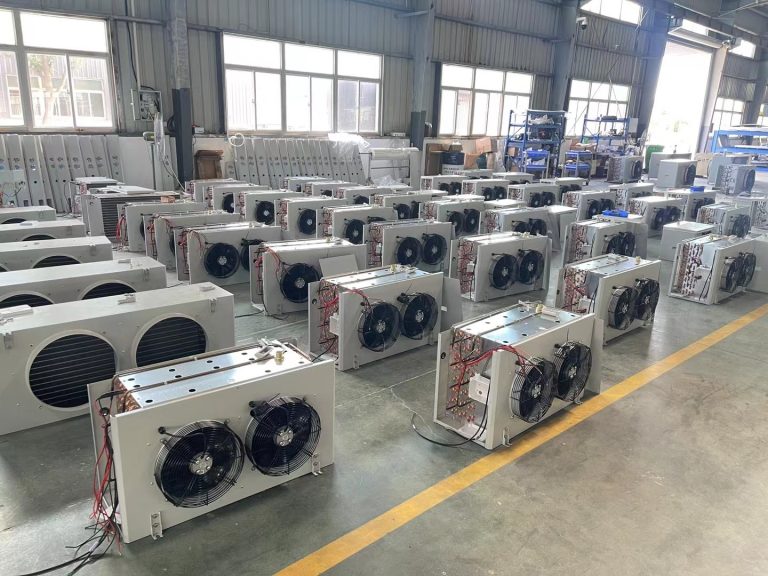
BesCool supplies complete cold rooms, condensing units, evaporators and spare parts, with installation drawings and remote engineering support worldwide. If your room is not performing, send the symptom, photos and temperature records through our contact form — our engineering team will help you narrow down the cause, and where replacement is the right answer, provide a factory-direct quotation for a correctly matched unit.
Related reading:
- Cold Room Energy Efficiency: How to Reduce Running Costs
- Cold Room Temperature Guide for Food Storage
- How to Choose a Condensing Unit for a Cold Room
Final diagnosis and any refrigerant or electrical work must follow the supplier’s drawings and local codes, and be carried out by qualified technicians. The values in this guide are general industry guidance — exact figures for your system come from its documentation and nameplate data.