Choosing a blast freezer is not the same as choosing a storage room. A blast freezer is sized around a process: how many kilograms of product you need to pull down to a target core temperature, and how fast. Get the process right and the equipment follows. Get it wrong and you end up with slow freezing, uneven product temperature, or a system that cannot keep up with the line.
This guide walks through the decisions in the order that matters, from product and cycle time to layout, controls, and the cases where a blast freezer is the wrong purchase.
Start With the Product and the Cycle, Not the Room
The first numbers to collect are about the food, not the freezer:
- Product type and dimensions
- Packaging and pack weight
- Entering core temperature
- Target final core temperature
- Required freezing or chilling time
- Batch size in kilograms, or continuous throughput in kilograms per hour
These inputs define the refrigeration load. A carton of cooked meat at 70°C is a different job from fresh seafood at 5°C, even in the same room.
Blast freezers normally run room air around -30°C to -40°C for freezing, but air temperature alone does not tell you whether the unit will hit your cycle time. Airflow, product spacing, and refrigeration capacity are equally important. The Food and Agriculture Organization describes air-blast freezers as forced-air systems that can run as batch or continuous units, and it stresses that how you load the product matters to performance.
Batch or Continuous: Match the Layout to the Throughput
The production pattern usually decides the configuration.
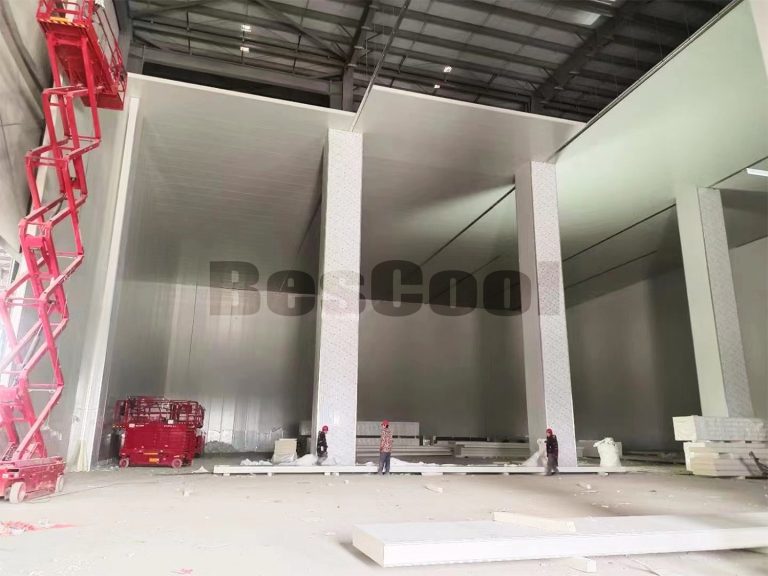
- Batch blast freezer room with racks or trolleys: flexible, good for daily batches and mixed products.
- Tunnel freezer: product moves through on a conveyor, good for steady, high-volume lines.
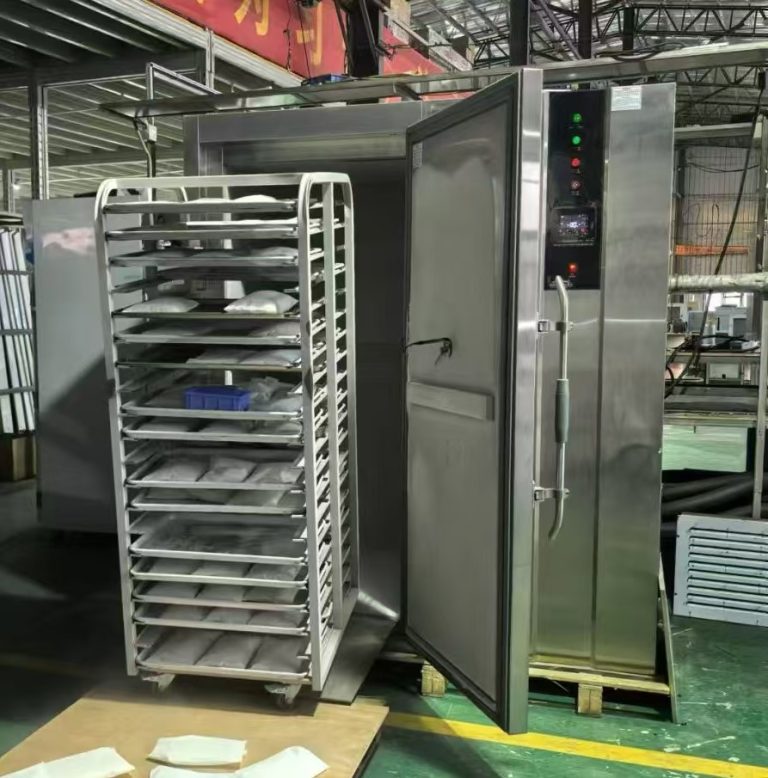
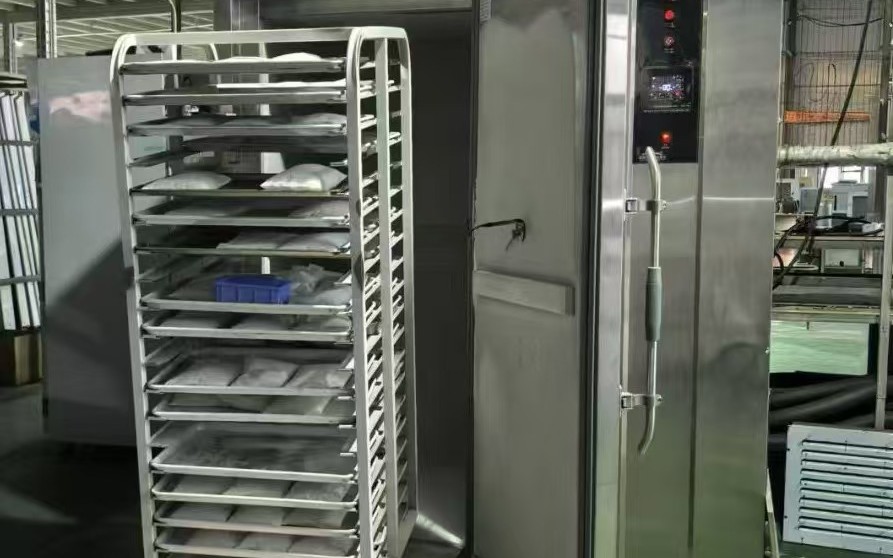
- Trolley or tray blast freezer: compact, fits a central kitchen or a single production shift.
- Spiral or conveyor freezer: continuous freezing for large, uniform output.
If the line runs continuously, a tunnel or spiral avoids waiting for a batch to finish. If you produce several products in daily batches, a blast room is easier to schedule and clean.
Key Specifications to Compare
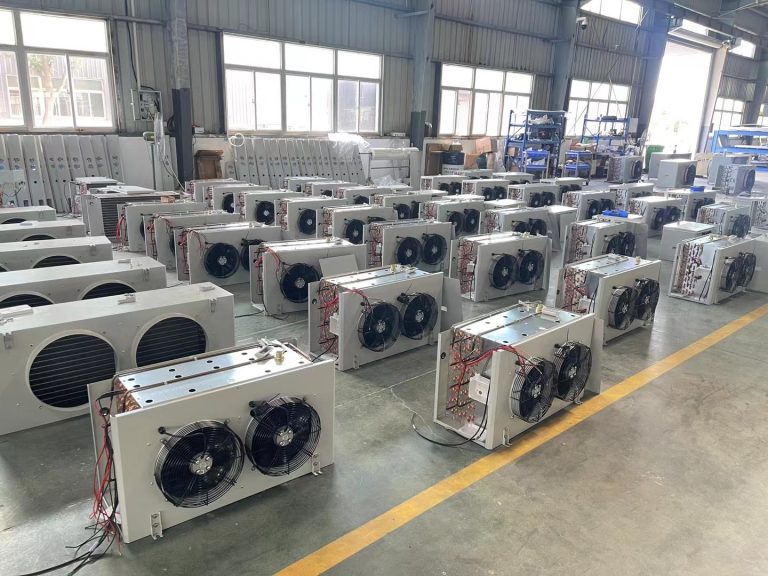
- Refrigeration capacity in kW, matched to the product load and pull-down time
- Air temperature range and airflow, which drive heat transfer
- Freezing time at your actual pack size, not a bare unit
- Defrost method: electric, hot gas, or water, and how often it interrupts production
- Controls and data logging, if you need cycle-time records for food safety
- Power supply: voltage, phase, and available current
Rapid freezing helps limit the formation of large ice crystals, which protects texture and moisture after thawing. That is the whole point of the equipment, so cycle time should be treated as a performance spec, not a guess.
Air Temperature vs Core Temperature
A display that reads -30°C tells you the air is cold. It does not tell you the centre of a carton has reached -18°C. The gap between air temperature and core temperature is where slow freezing hides. Specify the equipment against the core temperature you must reach, and confirm the supplier calculated the cycle for your largest pack.
Layout and Loading
A blast freezer needs deliberate air channels around trays, racks, or trolleys. Load it like a storage room, packed tight against the evaporator, and the airflow collapses. Agree on the tray or trolley arrangement before installation, and keep the same loading pattern every batch. Inconsistent loading is the most common reason a correctly sized freezer underperforms.
When a Blast Freezer Is the Wrong Purchase
A blast freezer is not a storage room. If the product arrives already frozen and you only need to hold temperature, buy a cold room. A standard storage room is not built to freeze a large batch of warm product, and forcing it into that role causes long compressor runs, ice buildup, and uneven temperature.
You also do not need a full blast freezer if the process only requires chilling rather than freezing. Blast chillers, which pull cooked food down quickly for later use, are a separate spec. And if volume is very low or intermittent, a smaller batch unit is cheaper than a room that sits mostly empty. We compared the two systems in more detail here: Blast Freezer vs Cold Room.
Information to Prepare for a Quote
- Product type, pack dimensions, and packaging
- Batch weight in kilograms, or throughput per hour
- Entering temperature and required final core temperature
- Target freezing time
- Tray, trolley, rack, or conveyor arrangement
- Number of batches per day
- Installation country and ambient temperature
- Available power supply
Frequently Asked Questions
How long does blast freezing take?
There is no single number. Freezing time depends on product thickness, packaging, entering temperature, target core temperature, airflow, and refrigeration capacity. The supplier should calculate the cycle from your actual product data.
Can I use a cold room as a blast freezer?
Not reliably. A standard storage cold room lacks the airflow and refrigeration capacity to pull a warm batch down in a controlled time. A purpose-built blast freezer, or a properly engineered low-temperature room, is the correct tool.
What power supply does a blast freezer need?
It depends on the refrigeration capacity and the condensing unit. Larger systems often need three-phase power. Confirm voltage, phase, and available current early, because it affects the equipment selection and the condensing unit.
Need a Blast Freezer for Your Line?
BesCool supplies custom blast freezers, modular cold rooms, condensing units, and complete refrigeration systems for food processing and cold chain projects. Send us your product type, batch size, entering and target temperatures, required cycle time, and power supply, and we will come back with a sizing and a quotation.
Contact BesCool for a blast freezer quotation.
Sources and Further Reading
- Food and Agriculture Organization of the United Nations (FAO), Freezing of Fruits and Vegetables: An Agribusiness Alternative for Rural and Semi-Rural Areas: fao.org/4/y5979e/y5979e03.htm
- Food and Agriculture Organization of the United Nations (FAO), Freezers (Fisheries Technical Paper): fao.org/4/V3630E/v3630e05.htm