A blast freezer and a cold room may look similar from the outside, but they are designed for different jobs. A blast freezer removes heat from newly produced food as quickly as possible. A cold room holds products that are already chilled or frozen at a stable temperature.
That difference drives refrigeration capacity, airflow, room temperature, cycle time, insulation, defrost control, and operating cost. Choosing the wrong system leads to slow freezing, uneven product temperature, excessive energy use, or not enough storage space.
The short version:
- Use a blast freezer when products must be rapidly chilled or frozen after processing.
- Use a cold room when products must be stored at a stable chilled or frozen temperature.
- Use both systems when a food processing facility needs rapid freezing followed by long-term frozen storage.
This guide compares the two systems and explains which one fits different projects.
What Is a Blast Freezer?
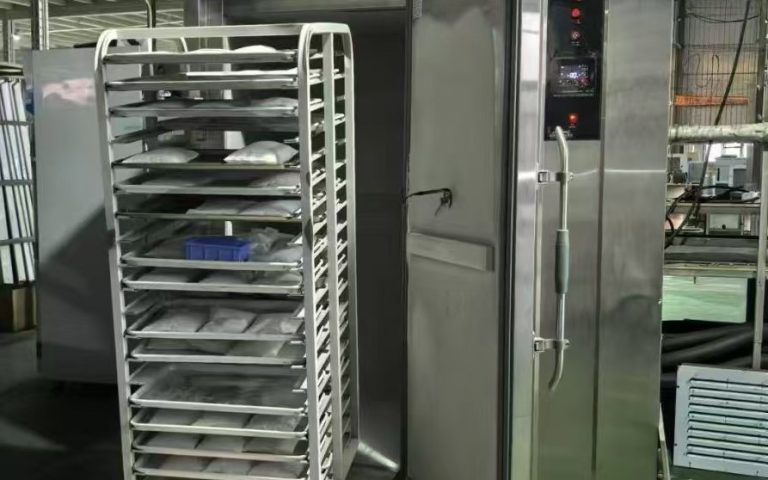
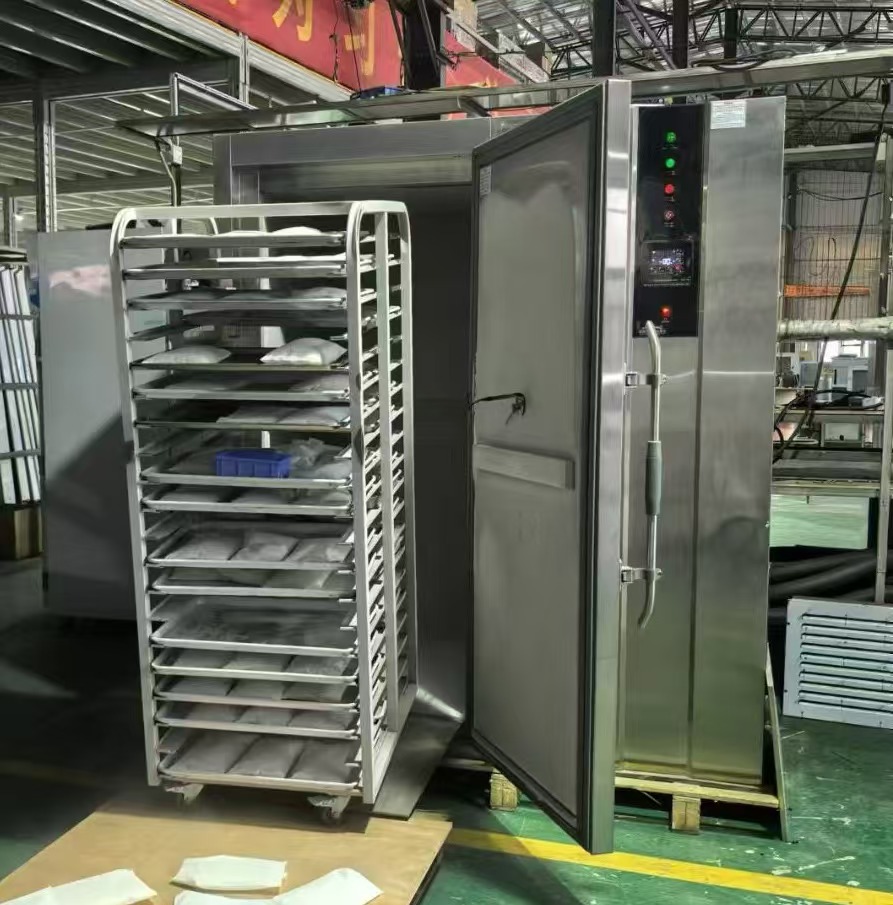
A blast freezer is a high-capacity refrigeration system built to pull product temperature down within a specified cycle. It normally uses very cold, high-velocity forced air to increase heat transfer between the food and the evaporator airflow.
Many blast freezer systems run room air around -30°C to -40°C for freezing applications, but air temperature alone does not determine performance. Air distribution, airflow speed, product spacing, and refrigeration capacity matter just as much.
Common blast freezer configurations include:
- Batch blast freezer rooms with racks or trolleys
- Tunnel freezers for continuous production
- Cart or tray blast freezers
- Spiral and conveyor freezing systems
- Custom low-temperature freezing rooms
The FAO describes air-blast freezers as versatile equipment that uses forced air and can run as batch or continuous systems. It also notes that loading arrangement and airflow around the products are important to performance.
A blast freezer is commonly used for:
- Meat and poultry
- Seafood
- Prepared food
- Bakery products
- Fruit and vegetables
- Ice cream and frozen desserts
- Central kitchens and food factories
Rapid freezing helps reduce the formation of large ice crystals and protects texture after thawing. It does not sterilize food, though. Product handling, hygiene, packaging, and the rest of the cold chain still need to follow local food safety rules.
What Is a Cold Room?
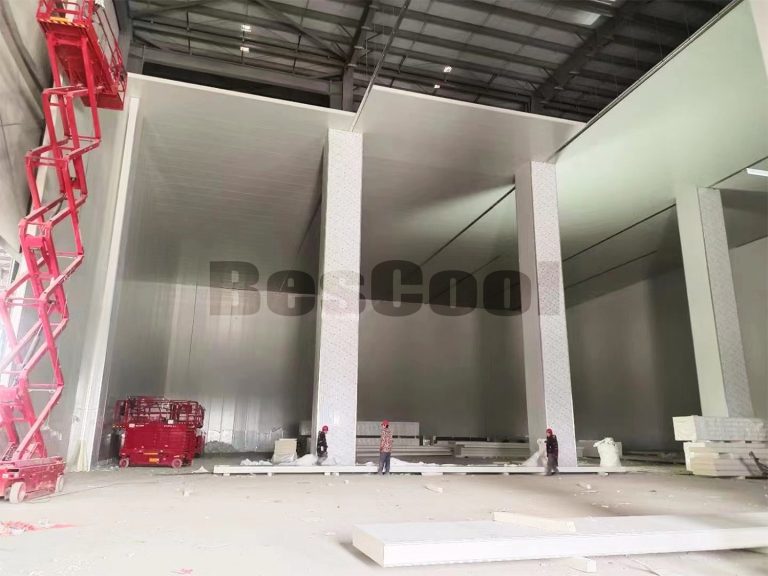
A cold room is an insulated refrigerated space designed to hold products within a selected storage temperature range. It can work as a chiller room, a freezer room, or a low-temperature storage room.
Typical applications include:
- Chilled food storage around 0°C to 5°C
- Meat and seafood storage near 0°C
- Fruit and vegetable storage at product-specific temperatures
- Frozen food storage around -18°C to -25°C
- Pharmaceutical and cold chain storage
- Supermarket, restaurant, hotel, and warehouse storage
A storage cold room is normally sized from heat transmission through the panels, door openings, lighting, workers, equipment, product load, ambient conditions, and the required storage temperature.
Unlike a blast freezer, a standard cold room is not built to freeze a large batch of warm product in a short time. Its job is to keep already chilled or frozen products stable.
Blast Freezer vs Cold Room Comparison
| Item | Blast Freezer | Cold Room |
|---|---|---|
| Main purpose | Rapidly chill or freeze products | Store chilled or frozen products |
| Product condition | Fresh, processed, warm, or partially chilled | Usually already chilled or frozen |
| Typical room temperature | Often -30°C to -40°C for freezing applications | Commonly 0°C to 5°C for chilling, or -18°C to -25°C for frozen storage |
| Airflow | High-velocity, controlled forced air | Lower airflow for stable storage |
| Refrigeration capacity | High capacity for short pull-down cycles | Capacity selected for continuous storage load |
| Design basis | Product weight, entering temperature, target core temperature, and cycle time | Room size, insulation, storage load, door usage, and ambient temperature |
| Operation | Batch or continuous production cycles | Continuous temperature maintenance |
| Energy profile | Higher instantaneous power demand | Lower peak load but longer continuous operation |
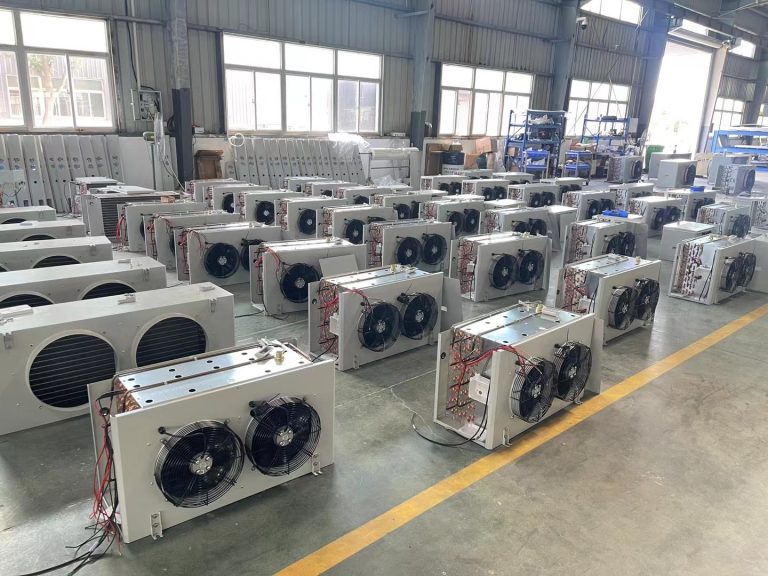
| Typical equipment | High-capacity condensing system, blast evaporator, controls, racks or conveyor | Condensing unit, storage evaporator, insulated panels, door, and controller |
| Common users | Food factories, seafood processors, meat plants, central kitchens | Restaurants, supermarkets, warehouses, hotels, logistics, and food factories |
These values are typical examples, not universal specifications. Every refrigeration project should be calculated from the actual product and operating conditions.
Why a Standard Cold Room Cannot Always Replace a Blast Freezer
One of the most common mistakes is loading a large amount of warm product into a storage cold room and expecting it to freeze quickly.
Insufficient refrigeration capacity
A storage room may hold -18°C easily when the products are already frozen. The same room can struggle when several tonnes of product enter at a much higher temperature. That extra product load is often far greater than the normal storage load.
Slow core temperature reduction
Cold room air temperature is not the same as product core temperature. A display may show the room is cold while the centre of a carton or large food item is still warm.
Uneven airflow
Storage rooms are arranged for capacity and access. If cartons or pallets block the evaporator airflow, some products cool much more slowly than others. A blast freezer needs deliberate air channels around trays, racks, cartons, or trolleys.
Product quality problems
Slow freezing can form larger ice crystals in some foods, which affects texture, moisture loss, and appearance after thawing. Freezing performance also depends on packaging thickness and product dimensions.
Longer compressor operation
Using an undersized storage system for heavy pull-down loads causes long compressor running times, temperature alarms, ice buildup, and extra equipment wear.
When Should You Choose a Blast Freezer?
A blast freezer is the better choice when the project has a defined freezing process rather than only a storage requirement.
Choose a blast freezer when:
- Fresh or cooked products enter at a relatively high temperature
- A required quantity must reach a target core temperature within a defined time
- Product quality after thawing matters
- The factory runs daily batches or continuous production
- Food safety procedures require controlled cooling or freezing
- The customer needs records of cycle time and product temperature
A seafood processor may need to freeze a specific number of kilograms per batch. A bakery may need to freeze prepared products before packaging. A central kitchen may need rapid cooling after production. In each case, the system has to be selected around product load and process time.
When Should You Choose a Cold Room?
A cold room is the better choice when the main requirement is storage.
Choose a cold room when:
- Products arrive already chilled or frozen
- Temperature stability matters more than rapid pull-down
- The room stores cartons, shelves, pallets, or ingredients
- Staff need frequent access for picking and loading
- The project needs chiller, freezer, or low-temperature storage space
- Storage capacity and energy efficiency are the main priorities
Cold rooms can be customized with hinged or sliding doors, floor insulation, shelving, lighting, alarms, remote monitoring, and backup systems. Panel thickness and refrigeration equipment should match the room temperature, ambient climate, and operating conditions.
Why Many Food Facilities Need Both Systems
For many processing projects, the correct answer is not blast freezer or cold room. It is blast freezer plus cold room.
A typical process:
- Fresh or processed food enters the blast freezer.
- The blast freezer reduces the product to the required core temperature.
- The frozen product moves to a storage cold room.
- The cold room holds product temperature until dispatch.
This arrangement separates the high refrigeration load of the freezing process from the lower, steady load of frozen storage. It also improves production planning, because the blast freezer is free for the next batch while finished products wait in storage.
The FAO emphasizes that frozen product quality depends on the complete temperature history: freezing, storage, transport, and distribution. Good equipment at the factory cannot make up for poor temperature control later in the cold chain.
Information Needed to Select the Right System
Prepare the following information before requesting a quotation.
For a blast freezer
- Product type
- Product weight per batch or per hour
- Entering core temperature
- Required final core temperature
- Maximum freezing or chilling time
- Product dimensions and packaging
- Tray, trolley, rack, or conveyor arrangement
- Number of batches per day
- Installation country and ambient temperature
- Available power supply
For a cold room
- Internal room length, width, and height
- Required storage temperature
- Product type and total storage quantity
- Product entering temperature
- Daily loading quantity
- Door size and opening frequency
- Shelf or pallet layout
- Indoor or outdoor installation
- Installation country and ambient temperature
- Available power supply
Complete information lets the supplier calculate product load, transmission load, airflow, evaporator capacity, condensing unit capacity, insulation, and defrost requirements more accurately.
Frequently Asked Questions
Can a cold room be used as a blast freezer?
A specially designed low-temperature room may perform a freezing process, but a standard storage cold room should not automatically be treated as a blast freezer. The refrigeration capacity, airflow, product arrangement, and required cycle time all have to be calculated for blast freezing.
Is a blast freezer always colder than a cold room?
Blast freezer air is usually colder than normal frozen storage air, but temperature is only one part of the design. High airflow, refrigeration capacity, product spacing, entering temperature, and cycle time also determine freezing performance.
Can products stay inside a blast freezer for storage?
Short-term holding may be possible depending on the system, but using a high-capacity blast freezer for long-term storage is usually inefficient. A dedicated frozen cold room is normally more suitable.
How long does blast freezing take?
There is no single answer. Freezing time depends on product type, thickness, packaging, entering temperature, target core temperature, airflow, loading arrangement, and refrigeration capacity. The supplier should calculate the cycle from actual project data.
Which system uses more energy?
A blast freezer normally has higher instantaneous power demand because it removes a large amount of heat within a short cycle. A cold room runs for longer periods to hold temperature. Total energy use depends on product load, insulation, ambient temperature, door usage, equipment efficiency, and operating schedule.
Need a Blast Freezer or Cold Room Solution?
BesCool manufactures custom blast freezers, modular cold rooms, condensing units, evaporators, and complete refrigeration systems for food processing and cold chain projects.
To receive a suitable proposal, send BesCool your product type, capacity, entering temperature, target temperature, cycle time, room size, destination country, and power supply.
Contact BesCool for a custom refrigeration quotation.
Source and Further Reading
- Food and Agriculture Organization of the United Nations (FAO), Freezing of Fruits and Vegetables: An Agribusiness Alternative for Rural and Semi-Rural Areas: fao.org/4/y5979e/y5979e03.htm
- Food and Agriculture Organization of the United Nations (FAO), Freezers (Fisheries Technical Paper): fao.org/4/V3630E/v3630e05.htm